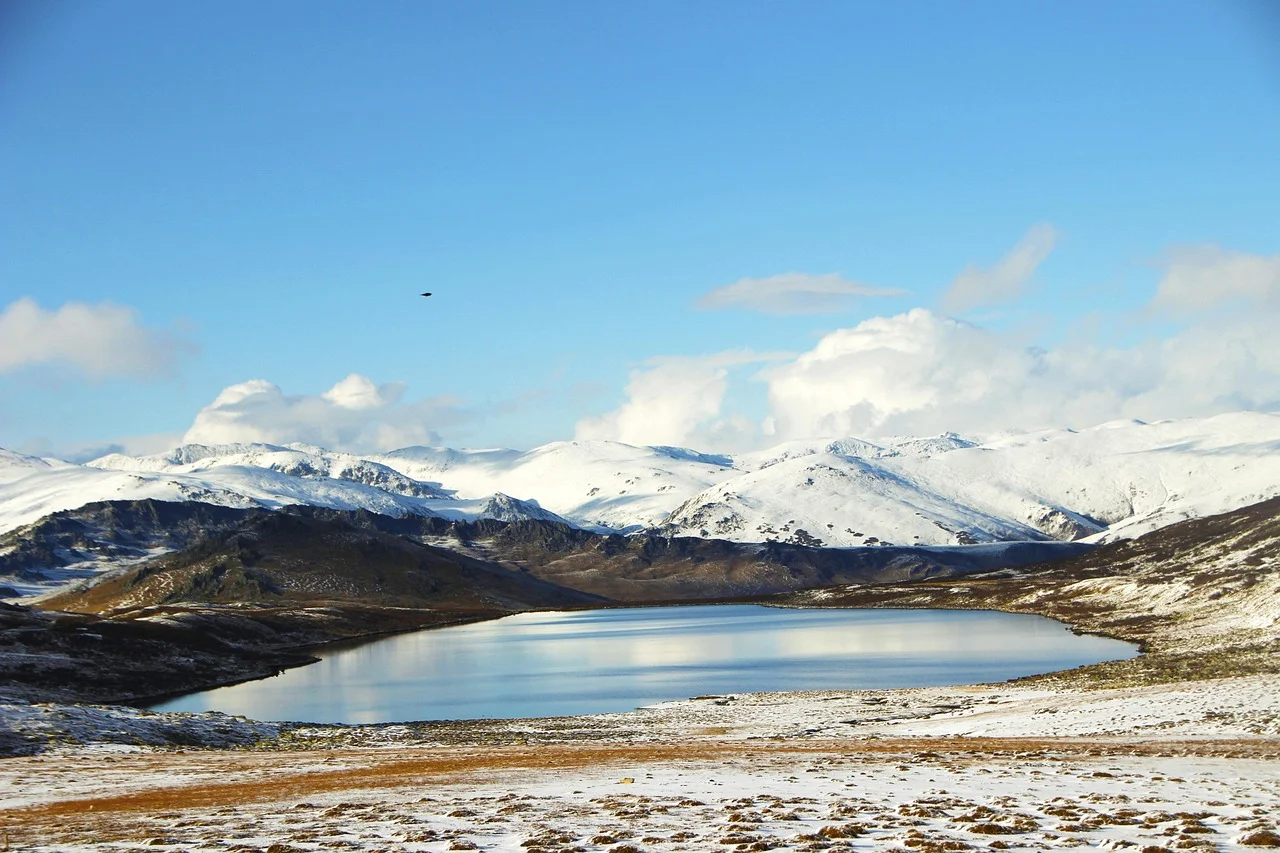
In many parts of the world, lakes transform into frozen landscapes during the winter months, their surfaces covered by thick sheets of ice. Yet some lakes defy expectations, remaining liquid even when air temperatures drop well below freezing.
This phenomenon has fascinated scientists and local communities alike, sparking questions about the interplay of physical, chemical, and geological factors that keep certain bodies of water from freezing.
The basic physics of lake freezing
Water freezes at 0°C under normal atmospheric pressure, but before ice can form on a lake, the surface water must cool to that temperature. Typically, lakes cool gradually as cold air chills the upper layers. Once the top layer freezes, it insulates the deeper water, slowing further cooling. However, when lakes resist freezing, it often means that this cooling process is interrupted by unusual conditions that prevent the surface from stabilizing into ice.
Depth as a protective factor
One of the most important factors is depth. Deep lakes hold vast amounts of thermal energy, which takes a long time to dissipate. The larger the water volume, the harder it is for surface cold to penetrate deeply enough to reduce the entire system’s temperature. Lakes such as Lake Baikal in Siberia, the deepest freshwater lake in the world, freeze only partially at the surface despite enduring some of the planet’s coldest winters. The immense depth ensures that the bulk of the water remains unfrozen, resisting complete ice cover.
Constant water movement
Another reason some lakes stay ice-free is the constant movement of water. Circulation can occur due to wind, river inflows, or temperature-driven convection. When water is constantly moving, it is harder for a stable, frozen surface to form. For example, lakes fed by fast-flowing rivers often remain open during winter, especially near inlets and outlets. Even in smaller lakes, strong winds can keep the surface in motion, disrupting ice formation and maintaining liquid water throughout the season.
Geothermal heating from below
Geothermal activity is a particularly striking explanation for non-freezing lakes. In regions with volcanic or tectonic activity, lakes may receive steady heat from underground springs. This constant influx of warmth prevents water temperatures from dropping low enough to freeze. Crater Lake in Oregon, though not geothermal in origin, demonstrates how volcanic basins can host unique hydrological dynamics. Similarly, Iceland has several lakes and hot springs that remain ice-free thanks to geothermal heating, even when surrounded by snow and glaciers.
Salinity and chemical composition
Not all lakes are purely freshwater. Some contain high concentrations of salts or other minerals, which lower the freezing point of water. This process, known as freezing point depression, means that saline lakes can remain liquid even in subzero conditions. The Dead Sea, for example, has such high salinity that it does not freeze under normal winter conditions. Smaller mineral-rich lakes around the world also display this resistance, reminding us that chemistry plays as important a role as temperature in determining ice formation.
Thermal stratification and overturn
Lakes often develop layers of different temperatures, a process known as stratification. During winter, colder water floats above warmer, denser water. If stratification remains stable, the lower layers stay insulated from freezing. In some lakes, periodic overturning occurs, where winds or density differences mix the layers, redistributing heat throughout the water column. This mixing can delay or even prevent surface ice formation. The interplay of stratification and mixing makes each lake’s thermal behavior unique, depending on its size, depth, and climate conditions.
Examples of lakes that rarely freeze
Several lakes around the world illustrate these principles:
- Lake Baikal, Russia – Its immense depth preserves liquid water below the surface, even though surface ice does form in extreme cold.
- Lake Geneva, Switzerland/France – The lake’s depth and constant movement prevent it from freezing entirely, despite Alpine winters.
- Great Salt Lake, USA – High salinity keeps the water liquid well below freezing temperatures.
- Lake Kivu, Rwanda/DR Congo – Heated from below by volcanic gases, it remains unusually warm and ice-free year-round.
Each of these lakes showcases a different factor—depth, salinity, geothermal input, or circulation—that disrupts the typical freezing process.
The role of climate and weather
Climate conditions also influence whether lakes freeze. Lakes in maritime climates, where winters are milder, are less likely to freeze than those in continental regions. Sudden thaws, heavy snow cover, or cloud insulation can also reduce freezing likelihood by preventing surface temperatures from remaining below zero for long periods. Thus, even within the same latitude, some lakes may freeze while others nearby remain liquid due to subtle differences in microclimate.
Implications for ecosystems
The freezing or non-freezing of a lake has significant ecological consequences. Ice cover limits oxygen exchange with the atmosphere, sometimes leading to oxygen depletion beneath the ice, which stresses aquatic life. In contrast, lakes that remain open during winter allow continuous oxygen exchange and can support year-round biological activity. Non-freezing lakes may host migratory birds seeking open water, as well as fish populations that rely on constant oxygen levels. These differences highlight the importance of physical conditions in shaping ecosystems.
Human uses and cultural meanings
Lakes that do not freeze often play important roles in human societies. Historically, they provided reliable water sources in winter, when other lakes were locked in ice. Today, they can serve as refuges for shipping routes, fishing, or winter recreation. Some cultures attach spiritual significance to these waters, seeing their constant flow as a symbol of vitality or resilience. The non-freezing quality becomes not only a scientific curiosity but also a cultural marker of the landscapes in which people live.
Waters that defy winter
Not all lakes submit to the grip of winter. Whether due to depth, salinity, geothermal heat, or ceaseless movement, some resist the transformation into ice and remain liquid against the odds. These waters remind us that natural systems are shaped by a complex interplay of forces, each lake telling its own story of resilience. By studying them, scientists gain insight not only into physical processes but also into the adaptability of ecosystems. In a world where climate patterns are shifting, the lessons of these lakes—unfrozen and enduring—are more relevant than ever.