For centuries, humanity has sought to understand the universe by studying light. From Galileo’s telescope to modern space observatories, astronomy has largely been a science of photons. Yet light can only reveal so much, as it can be absorbed, bent, or blocked by matter.
In 2015, a new window into the cosmos opened when scientists detected gravitational waves—tiny ripples in space-time predicted by Albert Einstein a century earlier. These waves are not light but distortions in the very fabric of reality, carrying information from some of the most violent events in the universe. Their discovery has revolutionized astrophysics, giving scientists a powerful new tool to probe cosmic mysteries.
What are gravitational waves?
Gravitational waves are distortions in space-time caused by massive accelerating objects. Imagine tossing a stone into a still pond—the ripples spreading outward resemble the way gravitational waves move through the universe. When two black holes or neutron stars orbit each other, their immense gravity stirs space-time, sending waves outward at the speed of light. These ripples stretch and compress distances, though by minuscule amounts. By the time they reach Earth, even powerful waves alter distances by less than a fraction of a proton’s width. Detecting them required extraordinary instruments and decades of technological innovation.
Einstein’s prediction and skepticism
In 1916, Einstein’s general theory of relativity predicted the existence of gravitational waves. He described gravity not as a force but as the warping of space-time caused by mass. Massive moving objects should therefore send ripples through this fabric. However, Einstein himself doubted whether such waves could ever be detected, given how weakly they interact with matter. For nearly a century, gravitational waves remained a theoretical concept—an elegant but unconfirmed feature of relativity—until modern science devised a way to measure them directly.
How are gravitational waves detected?
The Laser Interferometer Gravitational-Wave Observatory (LIGO) in the United States, along with its European counterpart Virgo, was built to capture these elusive ripples. Each observatory uses two long arms arranged in an L-shape, with powerful lasers bouncing between mirrors. As a gravitational wave passes, it slightly changes the length of the arms, altering the interference pattern of the laser light. The changes are incredibly tiny—comparable to measuring a distance smaller than a proton—but sensitive instruments can record them. The first detection in 2015 confirmed Einstein’s prediction and marked the birth of gravitational-wave astronomy.
Opening a new kind of astronomy
Gravitational waves carry information in a form entirely different from light. While telescopes capture photons, gravitational-wave detectors sense distortions in space-time itself. This allows scientists to study events invisible to traditional observation. For example, black hole collisions produce no light, yet they release enormous gravitational waves. Without these ripples, such events would remain hidden. By combining gravitational-wave data with electromagnetic signals, researchers can gain a more complete understanding of cosmic phenomena.
What gravitational waves reveal
Each detection of gravitational waves provides unique insights:
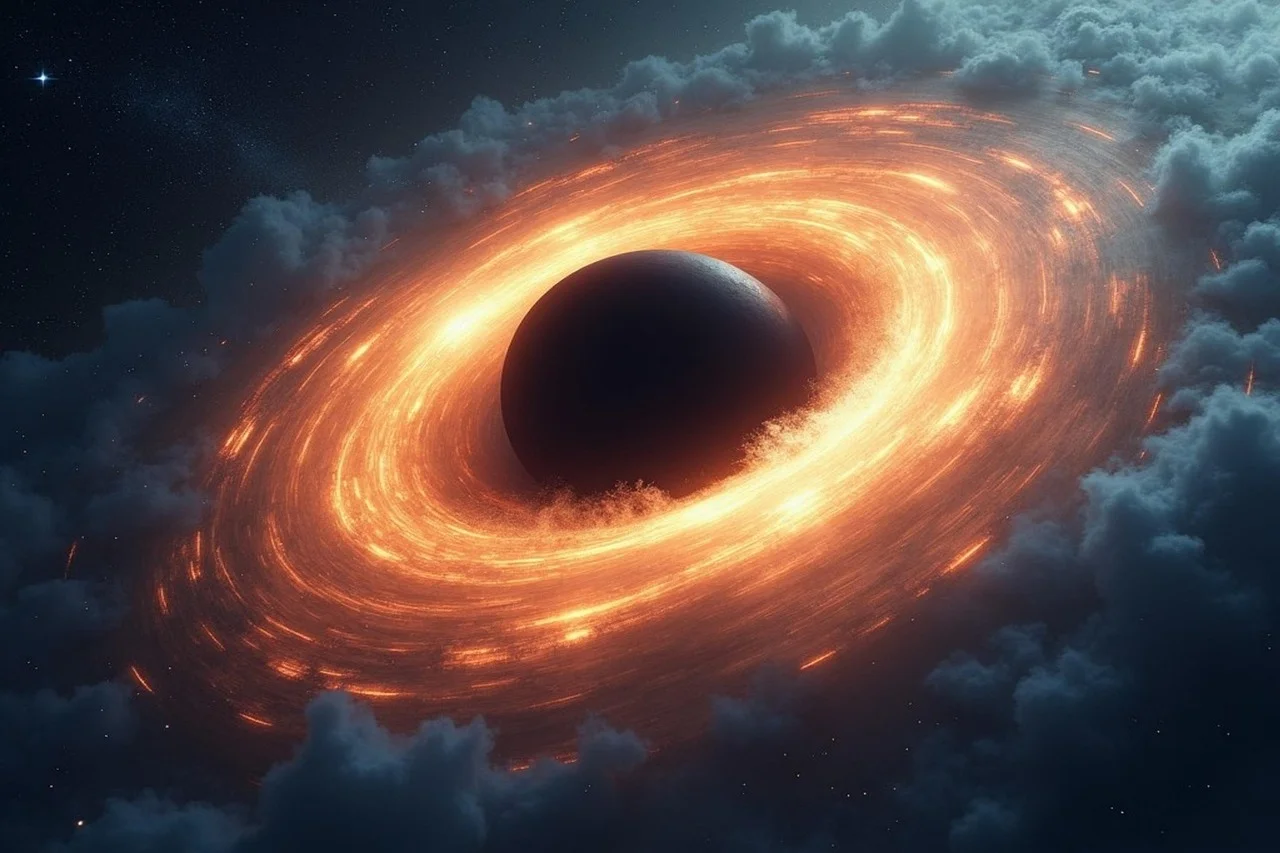
- Black hole mergers – The first detection revealed two black holes spiraling into each other, proving their existence and showing how they combine to form larger black holes.
- Neutron star collisions – In 2017, waves from colliding neutron stars were detected, followed by light signals captured by telescopes. This event confirmed that such collisions create heavy elements like gold and platinum.
- Cosmic history – By recording waves from distant events, scientists can study the evolution of the universe, since gravitational waves travel nearly unimpeded across billions of years.
These discoveries are reshaping our knowledge of how matter behaves under extreme conditions.
The challenge of measurement
Detecting gravitational waves is among the most difficult scientific achievements in history. The distortions are so small that they can be masked by earthquakes, passing trucks, or even microscopic thermal vibrations. To overcome this, LIGO and Virgo use advanced isolation systems, vacuum chambers, and precise laser technology. Multiple detectors around the world confirm signals, ruling out local disturbances. The precision required is extraordinary, but it enables scientists to hear “cosmic whispers” from billions of light-years away.
Expanding the network
Since the first detection, more observatories have joined the effort. The KAGRA detector in Japan and a planned observatory in India are expanding the global network. In the future, the European Space Agency’s LISA (Laser Interferometer Space Antenna) mission will launch detectors into space, capable of sensing lower-frequency waves that Earth-based instruments cannot. These advancements will allow scientists to study even more phenomena, such as the merging of supermassive black holes at galactic centers.
Gravitational waves and fundamental physics
Beyond astronomy, gravitational waves test the very foundations of physics. By analyzing the waves’ properties, scientists can probe the nature of gravity itself. If discrepancies from Einstein’s predictions were found, they could point toward new physics beyond relativity. Moreover, gravitational waves provide clues about the nature of space-time, the behavior of matter under extreme density, and possibly even the conditions of the universe moments after the Big Bang. They open the possibility of discovering phenomena we have not yet imagined.
The human dimension of discovery
The detection of gravitational waves represents not only a technological triumph but also a testament to human curiosity. Thousands of scientists, engineers, and technicians collaborated over decades to achieve what once seemed impossible. The discovery earned the 2017 Nobel Prize in Physics, highlighting its significance as a turning point in modern science. For the public, gravitational waves captured the imagination by showing that we can now “listen” to the universe, experiencing it in a way our ancestors could never have conceived.
Listening to the universe’s echoes
Gravitational waves help us understand the universe by revealing events hidden from light-based observation, testing fundamental physics, and offering glimpses into the cosmic past. They confirm Einstein’s vision while extending our ability to explore reality. With each new detection, we are not just measuring vibrations in space-time; we are listening to the universe tell its story, from the collision of black holes to the forging of elements in stellar explosions. In the ripples of space-time, humanity has found a new language through which the cosmos speaks.