In mythology, bridges are rarely just physical structures. They serve as powerful symbols—portals between worlds, thresholds of transformation, and passages to the divine or unknown. Among the many global traditions where bridges carry mythological significance, Norse and Japanese myths stand out for their profound and detailed use of these structures. From the shimmering Bifröst in Norse cosmology to the sacred bridges of Shinto shrines, these motifs reveal shared archetypes of transition, connection, and transcendence.
Bridges as Portals Between Worlds
One of the most recurring mythological functions of bridges is to act as transitional gateways between realms—whether spiritual, physical, or metaphysical. Both Norse and Japanese traditions portray bridges as literal and symbolic structures that connect disparate realities.
- In Norse mythology, the most famous bridge is Bifröst, a rainbow bridge that links Midgard (the human world) to Asgard (the realm of the gods).
- In Japanese mythology, sacred bridges often appear in connection with Shinto shrines, acting as spiritual thresholds between the mortal world and the realm of the kami (gods or spirits).
In both cases, crossing a bridge is not merely travel—it is a ritual action, a shift in spiritual or existential state. The symbolic act of stepping onto a bridge and moving across it reflects leaving behind the mundane and approaching something extraordinary.
The Norse Bifröst: A Bridge of Flame and Color
In the Norse cosmos, Bifröst is a critical component of the universe’s architecture. Described in the Prose Edda and the Poetic Edda, Bifröst is the rainbow bridge that gods use to travel between the divine and mortal realms. It is said to be constructed of fire, water, and air—explaining its shimmering, radiant appearance. But Bifröst is not just beautiful; it is functional and fraught with danger.
Guarded by the vigilant god Heimdall, Bifröst represents vigilance, protection, and the fragility of order. The bridge is destined to break during Ragnarök, the Norse apocalypse, symbolizing the collapse of the boundary between chaos and civilization. This foretold destruction gives Bifröst a tragic resonance—it is a bridge that represents divine connection but also the inevitability of cosmic change.
Key Symbolic Themes of Bifröst:
- Connection: It unites humans and gods, showing the permeability of realms.
- Judgment and duty: Heimdall’s role emphasizes responsibility and constant watchfulness.
- Mortality: Its destruction at Ragnarök reflects impermanence, even in divine constructs.
Shinto Bridges: Pathways to the Sacred
In Japanese religious tradition, especially Shintoism, bridges are often built at the entrance to shrines. Known as sacred bridges or shinbashi, these structures symbolize the act of crossing from the human world into the divine domain of the kami. Before crossing, visitors may perform purification rituals, such as washing hands and mouth at the temizuya (purification basin), indicating the sacred transition about to occur.
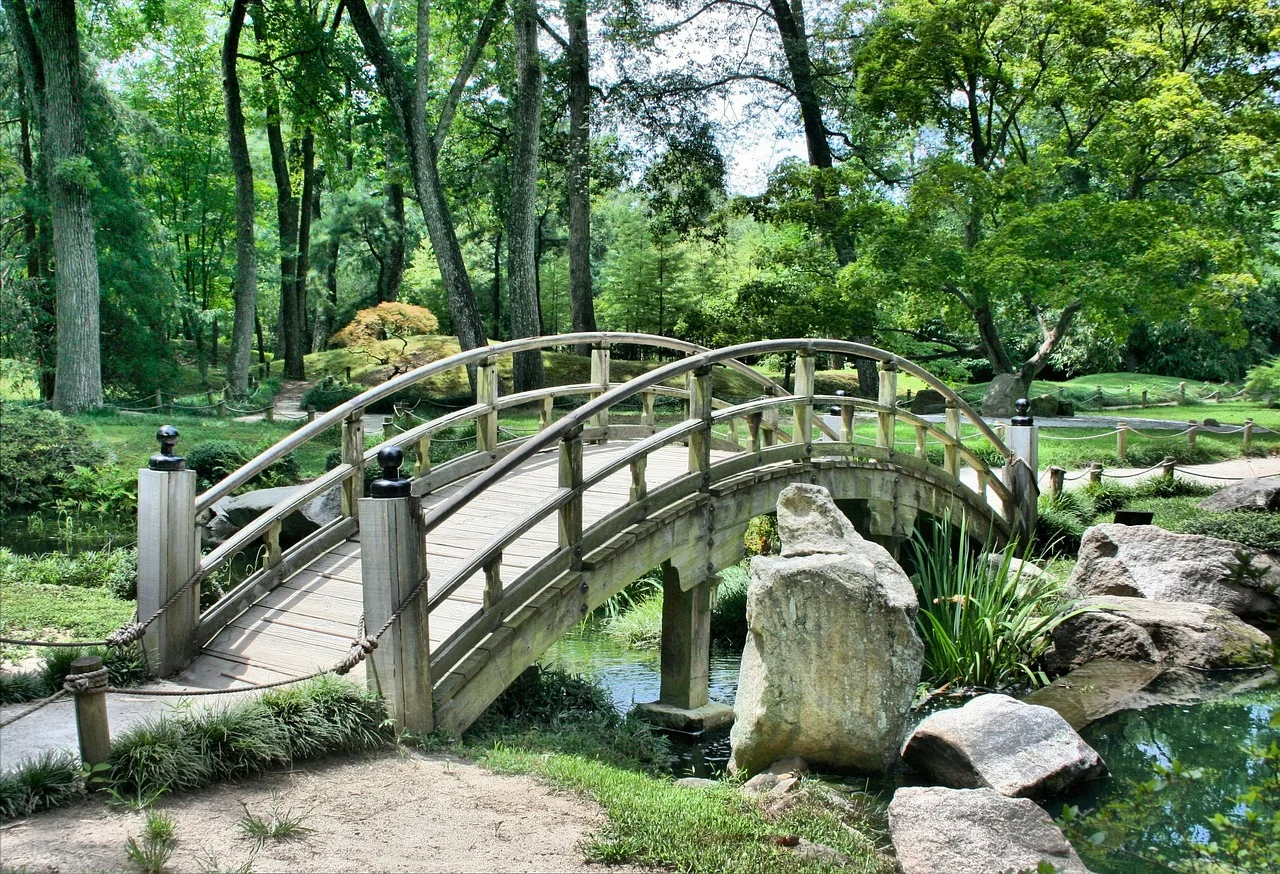
These bridges are rarely grand or elaborate—they are typically modest, arched, and made of wood or stone. What makes them powerful is their function: they mark the moment when an individual prepares spiritually to meet the sacred.
Symbolic Functions in Japanese Myth and Ritual:
- Spiritual readiness: Crossing the bridge often signifies a readiness to receive divine presence.
- Purification: The act echoes internal cleansing and intention-setting.
- Harmony with nature: Their simple, organic construction mirrors Shinto’s reverence for the natural world.
Additionally, in many Japanese myths and folk tales, bridges appear as places of fateful meetings or supernatural occurrences. In some cases, bridges are haunted by spirits or yokai, again highlighting their liminal, in-between nature.
Comparing the Two Traditions
Though separated by geography and cultural frameworks, Norse and Japanese uses of bridges share key thematic overlaps:
- Liminality: Both treat bridges as thresholds—places where the normal rules of reality do not always apply.
- Guardianship: Heimdall guards Bifröst, while rituals and customs guard Shinto bridges from improper crossing.
- Ritual significance: The act of crossing a bridge is ceremonial and often tied to purification, judgment, or fate.
However, there are differences in tone and emphasis. Norse mythology often frames the bridge as a site of cosmic consequence, involving war, death, and prophecy. Japanese tradition, meanwhile, emphasizes harmony, renewal, and reverence—fitting with the broader outlook of Shinto and Buddhist influence.
Bridges as Psychological Metaphors
Beyond their literal and mythological interpretations, bridges in both traditions can be seen as metaphors for human experience. They embody the transition from ignorance to knowledge, from fear to courage, from life to afterlife. Standing on a bridge is, in many ways, standing between two identities or phases of life.
In times of crisis or transformation, we often describe ourselves as being “at a crossroads” or “on a bridge” between two versions of ourselves. Mythological bridges thus mirror this inner journey—providing a cultural and spiritual map for navigating liminal states.
Modern Interpretations and Legacy
The power of these mythological bridges persists in contemporary culture. In literature, film, and even architecture, bridges remain potent symbols of connection, destiny, and transformation. For instance:
- Fantasy novels often feature rainbow bridges as homages to Bifröst (e.g., Marvel’s adaptation in the Thor series).
- Japanese anime and cinema use bridge crossings to signal moments of character evolution or spiritual awakening.
Even in modern ceremonial design, such as memorials or gardens, bridges continue to represent reflection, passage, and transition. Their presence is a reminder of how deeply rooted these symbols are in the human psyche.
Bridges in Norse and Japanese myths are more than structural marvels—they are spiritual and cultural symbols of profound depth. Bifröst and the Shinto shrine bridges represent humankind’s enduring fascination with crossing into the unknown, with seeking higher states of being, and with the rituals that guide us through life’s inevitable transitions.
Whether blazing across the sky in rainbow flame or quietly arching over a serene garden stream, these mythic bridges invite us to reflect on what it means to move forward, to transform, and to connect the mortal with the divine. In that journey, we find not only our place between worlds—but the enduring threads that link all cultures across time.