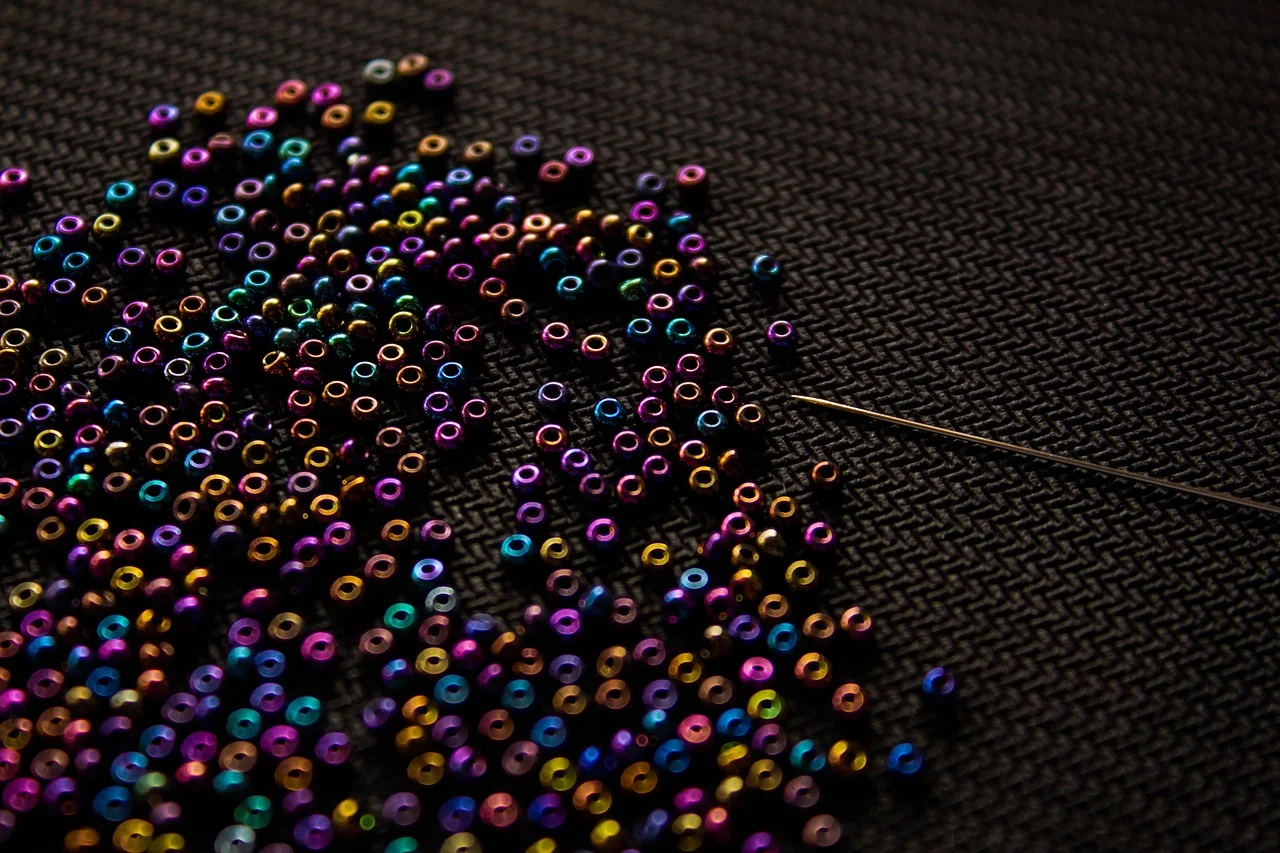
Beadwork in African societies has long been more than a decorative art. Tiny beads—crafted from shells, glass, stones, and later traded materials—were woven into elaborate patterns that conveyed messages about identity, spirituality, and community.
In ritual contexts, beadwork became a visual language, encoding stories about ancestry, cosmology, and moral values. To those who understood its symbols, a necklace, bracelet, or ceremonial cloth could speak volumes, serving as a living archive of cultural memory and spiritual belief.
Beads as a sacred medium
For many African cultures, beads were not ordinary materials but sacred objects imbued with spiritual power. Their colors, shapes, and arrangements were carefully chosen to align with ritual needs. Beads often represented life itself: round and endless, they symbolized continuity and the eternal cycle of birth, death, and rebirth. Because they were durable and passed down through families, beads were seen as carriers of ancestral presence. In rituals, they became conduits for connecting the living with spiritual forces and the unseen world.
Color symbolism and layered meanings
Colors were central to the stories encoded in beadwork. Each hue carried symbolic weight, often rooted in cosmology and moral philosophy. For example:
- White often stood for purity, the realm of the spirits, and ancestral blessings.
- Red symbolized vitality, fertility, and also danger or sacrifice, depending on context.
- Black represented the earth, ancestral protection, and the mystery of life and death.
- Blue was associated with peace, love, and the nurturing qualities of water.
- Green stood for growth, abundance, and the natural world’s vitality.
By arranging these colors in patterns, artisans created beadwork that told layered stories. A single bracelet might simultaneously honor ancestors, express hopes for fertility, and invoke protection against harm.
Rites of passage and personal narratives
Beadwork featured prominently in rites of passage such as births, initiations, marriages, and funerals. In initiation ceremonies, beads communicated the transition from childhood to adulthood. The colors and designs often reflected lessons about responsibility, courage, or the spiritual journey of maturity. For brides, intricate beadwork conveyed stories of family lineage, fertility hopes, and the new bonds formed through marriage. Funerary beadwork honored the deceased, embedding prayers for safe passage into the afterlife and signaling continuity between generations.
Beadwork as oral history
In societies where oral tradition was the primary mode of knowledge transmission, beadwork acted as a visual extension of storytelling. Patterns and motifs carried references to clan histories, migrations, and legendary figures. For example, a sequence of alternating colors might represent a battle remembered in local history, while a particular arrangement of beads could symbolize the founding myth of a community. In this way, beadwork reinforced collective memory, ensuring that critical stories were preserved not only through words but also through symbols worn on the body.
The role of women as storytellers
Women were often the creators of beadwork, and through their artistry, they became custodians of cultural stories. By embedding narratives into ritual garments and jewelry, women ensured that traditions were carried into daily life and ceremonial events. Beadwork also allowed women to express personal creativity while aligning with communal values. The ability to interpret and craft meaningful designs gave them an important role as educators, shaping how younger generations understood their heritage and spiritual obligations.
Cosmology in patterns and designs
Many beadwork designs reflected cosmological beliefs. Circular motifs symbolized the cycles of the cosmos, while linear arrangements could represent journeys between the earthly and spiritual realms. In some traditions, triangular patterns symbolized balance between male and female principles. These abstract designs were never merely decorative—they carried deep metaphysical meaning, turning ritual garments into maps of the universe. When worn during ceremonies, such beadwork reminded participants of their place within a larger cosmic order.
Beadwork in divination and healing
Beads were also used in divination practices. Diviners sometimes cast beads or wore them in specific arrangements to communicate with spirits and interpret signs. Certain beadwork was believed to carry healing power, protecting wearers from illness or misfortune. The stories embedded in these objects were not static; they were part of an active dialogue with the spirit world, evolving through ritual use. The very act of wearing or handling beads reinforced the connection between people, their ancestors, and divine forces.
Regional variations of symbolic stories
Across Africa, beadwork traditions varied widely, reflecting local histories and cultural values. Among the Yoruba of Nigeria, bead crowns worn by kings told stories of divine authority and ancestral legitimacy. In South Africa, Zulu beadwork carried messages of love and courtship, with colors and sequences functioning as coded communication between young people. Among the Maasai of Kenya and Tanzania, bead necklaces marked age, marital status, and warrior achievements, embedding personal and communal stories in their designs. Each region developed unique symbolic vocabularies, yet all shared the principle of embedding meaning in artistry.
Colonial disruption and continuity
Colonialism disrupted traditional beadwork practices, introducing new materials, suppressing rituals, and redefining cultural symbols. Yet beadwork survived by adapting. Imported glass beads from Europe and Asia were incorporated into African traditions, often with new symbolic meanings. While some stories were lost, others persisted, and new ones emerged, reflecting resilience and creativity. Today, beadwork continues to serve as a bridge between past and present, linking ancestral rituals to contemporary identity.
Beadwork as a living archive
In modern times, African beadwork has found renewed importance. Artisans, cultural groups, and museums recognize it as a living archive that encodes stories of survival, adaptation, and continuity. Ritual beadwork is still crafted for ceremonies, while contemporary artists use beads to comment on history, politics, and identity. These practices ensure that the narratives once hidden in patterns remain alive, accessible, and meaningful to new generations.
Threads of memory and spirit
The stories embedded in African beadwork used for rituals reveal the power of material culture to carry history, spirituality, and meaning. Far from being simple ornaments, beads acted as vessels of memory, binding individuals to their ancestors, their communities, and the cosmos. Each strand, each color, and each pattern was a thread in a larger narrative, woven with intention and belief. Through beadwork, African societies transformed everyday materials into sacred stories—stories that continue to resonate wherever beads are worn, displayed, or remembered.