In the Roman world, art was not confined to temples and public monuments—it entered the very heart of private life. One of the most distinctive artistic expressions within elite Roman households was the mosaic.
These intricate floor and wall decorations were more than decorative features; they communicated wealth, refinement, and cultural aspirations. For the owners of Roman villas, mosaics became a language of status and authority, embedding messages about their identity and their place within society.
The craft of Roman mosaics
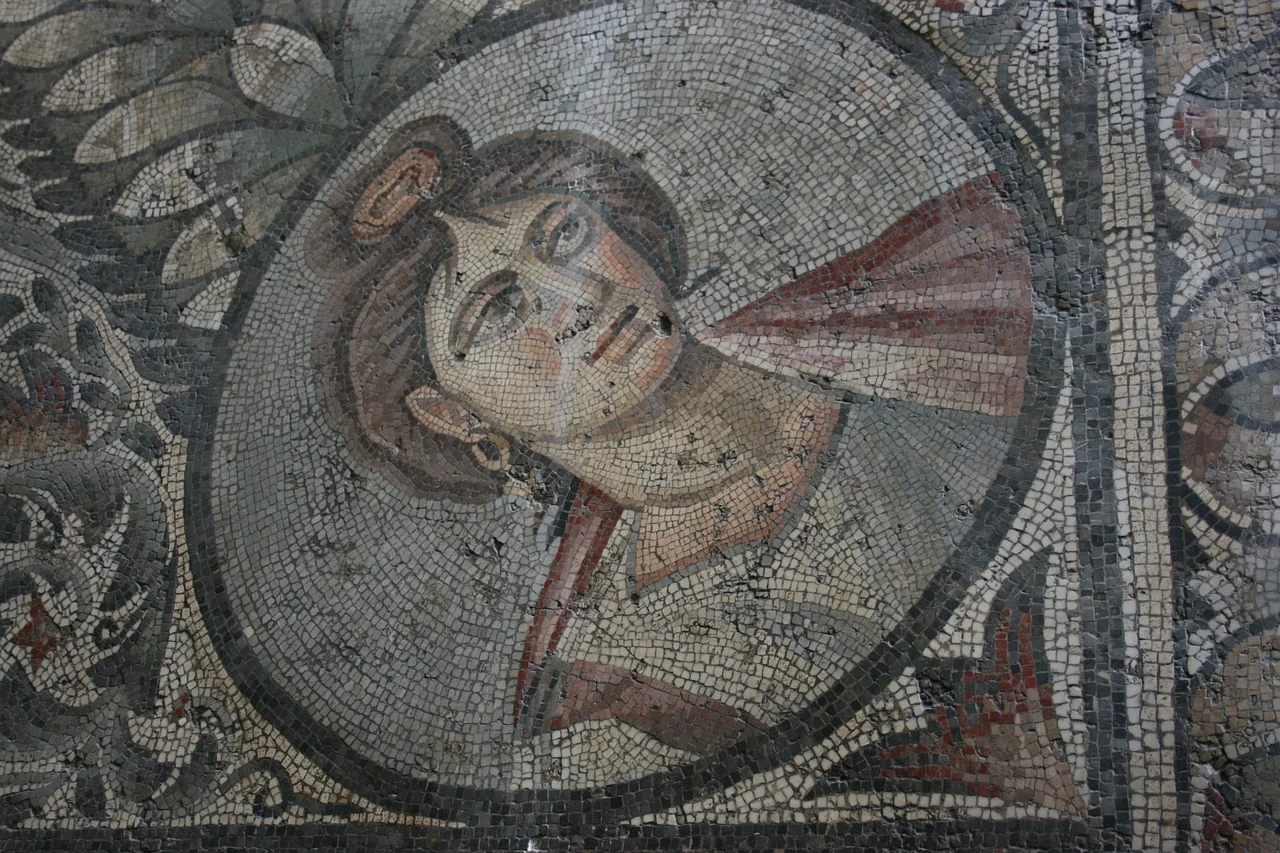
Mosaics were created from small pieces of colored stone, glass, or ceramic called tesserae. Artisans carefully arranged these tesserae into geometric patterns, mythological scenes, or depictions of daily life. The complexity and vividness of a mosaic depended not only on the skill of the craftsman but also on the quality of materials used. While simpler mosaics could be found in modest dwellings, the most elaborate works adorned the villas of the wealthy, signaling both resources and taste.
Mosaics as indicators of wealth
The production of a mosaic required significant expense. The finest tesserae had to be imported from distant quarries, and skilled craftsmen often traveled long distances to work on commissions. To commission large-scale or detailed mosaics was therefore a visible investment in luxury. Wealthy villa owners showcased their prosperity by covering vast rooms with intricate designs. Guests entering a villa would immediately recognize the financial power needed to sustain such artistry, making mosaics a silent but effective declaration of affluence.
Mythological imagery and cultural prestige
Many Roman mosaics drew on the myths of Greece and Rome, depicting gods, heroes, and legendary events. These images not only beautified spaces but also associated villa owners with the cultural prestige of classical learning. A mosaic of Hercules or Dionysus could symbolize strength, fertility, or divine favor, reflecting the owner’s aspiration to embody such qualities. By commissioning mythological scenes, patrons aligned themselves with the traditions of the educated elite, reinforcing their claim to cultural sophistication.
Political symbolism in mosaics
Mosaics were also political statements. Scenes of military victories, gladiatorial combat, or imperial iconography reinforced loyalty to Rome’s power structures. A villa owner might commission a mosaic showing Mars, the god of war, to emphasize martial values or commemorate military service. Others depicted triumphal processions or imperial symbols, signaling allegiance to the empire while projecting authority within their own communities. In this sense, mosaics functioned as private monuments to public power.
Social spaces decorated with mosaics
Mosaics were not randomly placed; they were strategically located in spaces where social interactions occurred. Dining rooms (triclinia) often contained elaborate floor mosaics, ensuring that guests feasted while surrounded by images of abundance, myth, or grandeur. Entrance halls frequently displayed striking geometric or figurative patterns, offering a powerful first impression of wealth and status. Even bathhouses within villas were adorned with aquatic themes, blending luxury with leisure. Each placement reinforced the owner’s image as a patron of art and culture.
Depictions of daily life and estate identity
While mythological and symbolic images were common, many mosaics depicted scenes of daily activities—hunting, fishing, farming, or banquets. These motifs often reflected the lifestyle and identity of the villa’s owner. A landowner might commission hunting scenes to highlight control over nature and leisure pursuits reserved for the elite. Agricultural motifs underscored prosperity derived from estates. Such images served both as reflections of personal identity and as reminders of the economic foundations of the owner’s wealth.
Regional variations and local identity
Mosaic styles varied across the Roman Empire, reflecting both local traditions and imperial influences. In North Africa, mosaics often featured vibrant hunting scenes and geometric designs, while villas in Antioch displayed refined mythological imagery. These regional differences not only celebrated local identity but also demonstrated the empire’s cultural diversity. Yet across all regions, the presence of mosaics was consistently tied to status, marking villa owners as participants in a shared elite culture of display.
Mosaics as educational tools
In addition to their decorative role, mosaics often served didactic functions. Scenes of philosophers, poets, or allegorical figures conveyed messages about wisdom, virtue, and morality. For the children of elite households, these images acted as visual lessons in cultural ideals. They transformed floors and walls into constant reminders of the values expected of the ruling class, reinforcing education not through words but through art embedded in everyday life.
The role of artisans and patronage
While mosaics reflected the status of villa owners, they also highlighted the role of artisans in Roman society. Skilled mosaicists were in high demand, and their work was a testament to both craftsmanship and patronage. The collaboration between wealthy patrons and artisans reflected a social hierarchy in which art reinforced the power of those who could afford to commission it. In this way, mosaics embodied not only stories of myth and culture but also the social realities of labor, artistry, and patron-client relationships.
Symbolism of permanence
Unlike frescoes or movable decorations, mosaics were fixed, durable, and long-lasting. Their permanence symbolized stability and legacy. For villa owners, this endurance served as a metaphor for their family’s wealth and influence, meant to be remembered by future generations. Even today, many mosaics survive as archaeological treasures, outlasting the societies that created them. This durability reinforced their role as markers of social and cultural permanence in the ancient world.
Mosaics as reflections of identity and ambition
Mosaics in Roman villas were never mere ornamentation. They were calculated expressions of wealth, education, loyalty, and personal identity. Each tessera contributed to a larger narrative about who the villa owner was, how they wished to be perceived, and what values they championed. In a society where status was constantly negotiated and displayed, mosaics served as silent ambassadors of power. They transformed private spaces into stages where art, culture, and authority converged, ensuring that those who entered a villa would leave with a lasting impression of the owner’s prominence.