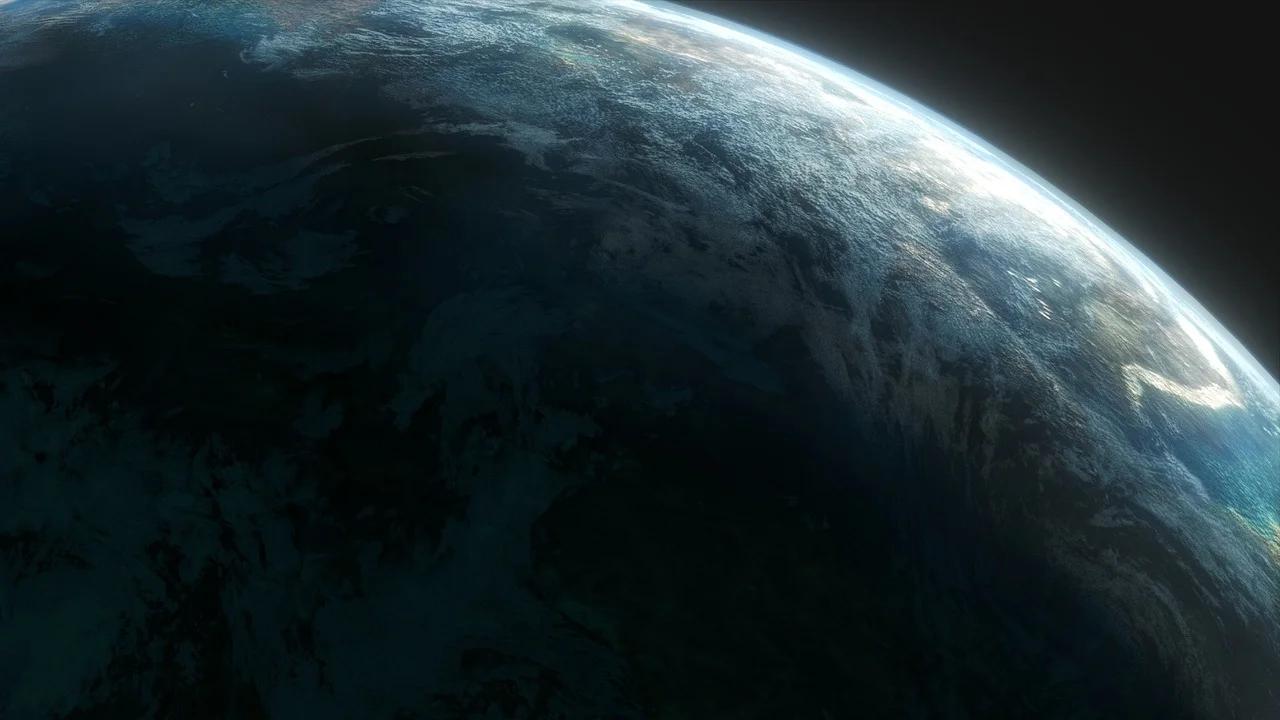
The search for water beyond Earth is one of the central goals of modern astronomy and planetary science. Water is essential to life as we know it, and its presence on other planets or moons would dramatically increase the chances of finding extraterrestrial life.
Even in places where life may not exist, water helps shape landscapes, climates, and geological activity. But detecting water on worlds so far away presents major challenges. Scientists must rely on a combination of spacecraft missions, telescopic observations, and innovative technologies to uncover the presence of this life-sustaining substance.
The importance of water in planetary science
Water is not only critical for biology but also plays a key role in planetary evolution. Its presence can influence volcanism, atmosphere formation, and even magnetic activity. On Earth, water cycles through oceans, glaciers, clouds, and underground reservoirs, sustaining ecosystems and shaping the surface. When astronomers look for water elsewhere, they are searching not just for a chemical compound but for evidence of conditions that may resemble our own planet’s ability to support life.
Direct exploration by spacecraft
For nearby worlds, spacecraft provide the most reliable evidence of water. Robotic missions to the Moon, Mars, and icy moons in the outer solar system have carried instruments designed to detect ice, vapor, or hydrated minerals. NASA’s Mars rovers, such as Curiosity and Perseverance, have studied rock formations and soil chemistry to reveal signs of ancient riverbeds and lakebeds. The Mars Reconnaissance Orbiter has used radar to identify subsurface ice deposits. Similarly, missions to Jupiter’s moon Europa and Saturn’s moon Enceladus have detected water plumes erupting from beneath icy crusts, confirming that liquid oceans exist far below the surface.
Infrared observations and spectroscopy
For planets and moons too distant to visit directly, scientists use telescopes equipped with spectrometers. These instruments analyze light to identify the chemical fingerprints of different molecules. Water molecules absorb and emit light at specific infrared wavelengths. By studying the light reflected from a planet’s atmosphere or surface, astronomers can infer whether water vapor, ice, or hydrated minerals are present. The James Webb Space Telescope (JWST), launched in 2021, has revolutionized this approach by detecting water signatures in the atmospheres of exoplanets orbiting distant stars.
Studying planetary atmospheres
One key method for detecting water on exoplanets is transit spectroscopy. When a planet passes in front of its host star, some of the star’s light filters through the planet’s atmosphere. By examining how this light changes, scientists can identify the chemical composition of the atmosphere. Water vapor leaves a distinctive imprint in the spectrum, allowing astronomers to confirm its presence even from light-years away. This technique has already revealed water signatures in several “hot Jupiters” and smaller planets, although determining whether the water exists in liquid form remains more challenging.
Clues from planetary geology
Even without direct liquid water, geological features can suggest past or present presence of water. On Mars, dried river valleys, deltas, and layered sedimentary rocks are strong indicators of an ancient watery environment. Similarly, icy ridges and cracks on Europa suggest that subsurface water has shaped its outer shell. By comparing surface features across worlds, scientists can identify patterns that point toward water-driven processes, expanding the search beyond purely chemical detection.
Radio and radar investigations
Radar instruments provide another powerful tool. By bouncing radio waves off a planet’s surface, scientists can map subsurface structures. Certain radar reflections indicate the presence of ice or even liquid water buried beneath rock or soil. On Earth, similar methods are used to study glaciers and underground aquifers. When applied to Mars or icy moons, radar has revealed reservoirs of frozen and liquid water hidden from view, adding crucial evidence to the broader picture of water distribution in the solar system.
Studying comets and asteroids
Comets and certain asteroids serve as natural laboratories in the study of water in space. Comets are rich in ice, and their tails of vapor and dust provide clear evidence of water sublimating as they approach the Sun. Spacecraft like ESA’s Rosetta mission, which studied Comet 67P/Churyumov-Gerasimenko, have measured the composition of cometary water directly. Understanding the water content of small bodies helps scientists estimate how water might have been delivered to Earth and other planets during the early history of the solar system.
Challenges in confirming liquid water
Detecting water does not always mean confirming liquid water. Ice and vapor are relatively easy to identify, but liquid water requires specific conditions of temperature and pressure. On planets with thin atmospheres, such as Mars, surface water cannot remain stable for long, sublimating or evaporating quickly. Subsurface water is harder to confirm because it cannot be observed directly. Missions to icy moons aim to resolve this challenge by sending landers or probes to sample plumes or drill through ice layers. Until then, much of the evidence for liquid oceans beneath surfaces remains indirect.
The search for habitable zones
When studying exoplanets, scientists focus on the “habitable zone” of a star system, the region where conditions may allow liquid water to exist on a planet’s surface. This zone depends on the star’s size and temperature. However, being in the habitable zone does not guarantee habitability; atmospheric composition, planetary mass, and geological activity all play critical roles. Still, locating water vapor in exoplanet atmospheres within habitable zones is one of the most promising avenues for identifying potentially life-supporting worlds.
Water as a cosmic common thread
The methods used to search for water on distant worlds highlight the creativity and persistence of modern science. By combining spacecraft exploration, spectroscopy, radar mapping, and comparative geology, scientists build a picture of where water exists and in what forms. The discoveries of ice on Mars, oceans beneath Europa and Enceladus, and water vapor in the atmospheres of exoplanets suggest that water is far more widespread in the universe than once imagined. Each new detection brings us closer to answering fundamental questions about whether life might exist beyond Earth.
Tracing cosmic oceans across the universe
The search for water on distant worlds reveals more than the presence of a vital resource—it demonstrates humanity’s drive to connect with the cosmos. Water, whether locked in ice, hidden beneath alien crusts, or drifting as vapor in exoplanet skies, ties distant worlds to our own blue planet. As technology advances, the quest to trace these cosmic oceans continues to expand, reminding us that the story of water is also the story of life and of humanity’s enduring curiosity about the universe.