Dragons are among the most enduring and widespread mythological creatures in human history. From the lung of Chinese legends to the fire-breathing beasts of European tales, dragons have captured the imagination of nearly every culture on Earth. But why does this mythical creature, often so similar in form and nature, appear independently across distant civilizations?
Universality of the Dragon Motif
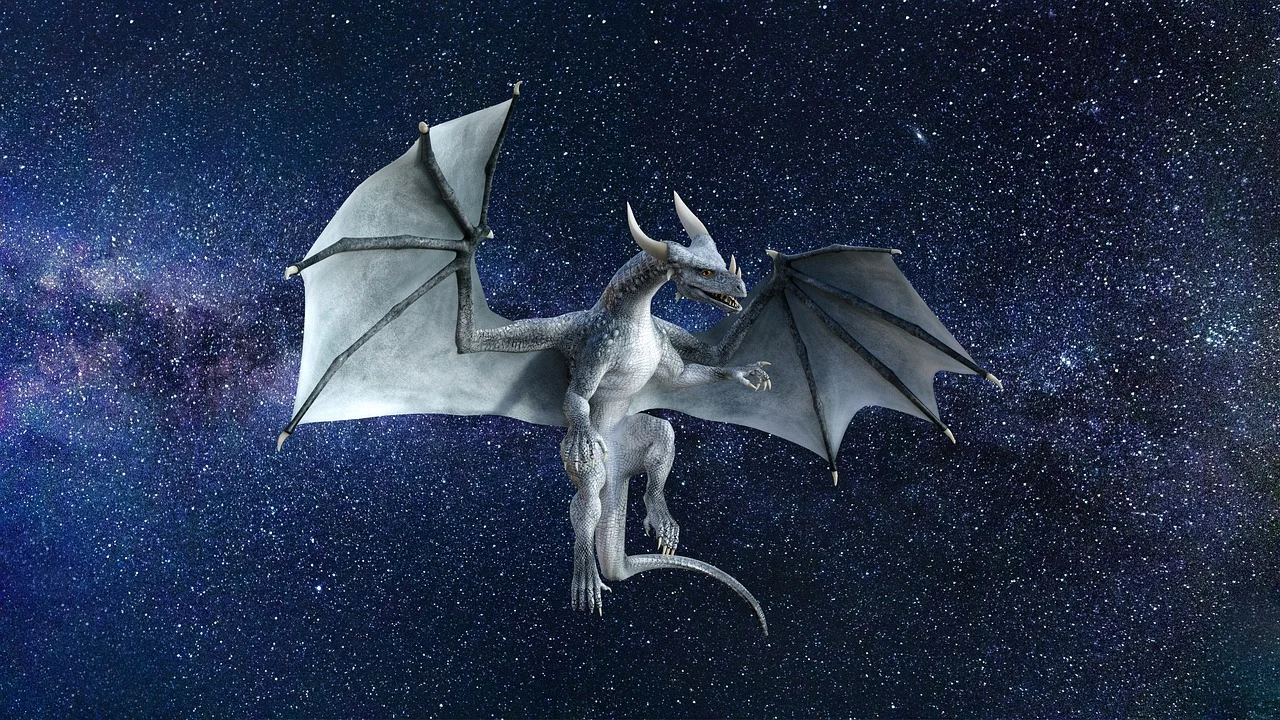
Across cultures and centuries, dragons are depicted as large, powerful, serpentine beings, often associated with natural elements such as water, fire, and air. They can be both protectors and destroyers, wise guardians or malevolent forces. Despite vast geographical separation, ancient civilizations in Europe, Asia, Africa, and the Americas all produced stories involving dragon-like creatures.
In China, dragons symbolize strength, good fortune, and imperial power. In European medieval myths, dragons are often depicted as evil monsters to be slain by brave heroes. In Mesoamerican cultures, Quetzalcoatl, the feathered serpent god, combines avian and reptilian features in a dragon-like form. Even in Aboriginal Australian stories, the Rainbow Serpent is a powerful mythological entity associated with creation and water.
The recurrence of such similar creatures across the globe suggests that dragons are not merely inventions of isolated cultures, but rather expressions of shared human experiences and fears.
Evolutionary Psychology: Hardwired Fear
One theory explaining the ubiquity of dragons is rooted in evolutionary psychology. Some scientists propose that human beings are biologically predisposed to fear certain predators, particularly large snakes, predatory cats, and birds of prey. These animals posed significant threats to early humans.
The dragon, with its serpentine body, reptilian features, and often flight capability, combines aspects of all three of these threats. Psychologist David E. Jones, in his work An Instinct for Dragons, argues that the dragon is a composite image born from humanity’s collective unconscious fear of predators.
By combining elements of real-world dangers into one creature, dragons served as powerful archetypes that embodied existential threats. Over time, these archetypes became embedded in the mythology of nearly every culture, transmitted through storytelling as a means of warning, educating, or inspiring.
Fossil Discoveries and Ancient Imagination
Another compelling explanation for the global presence of dragon myths lies in the ancient discovery of dinosaur fossils and the bones of large prehistoric animals.
Long before the formal study of paleontology, ancient peoples occasionally unearthed enormous bones and skeletons. Without a scientific framework to explain these findings, it was natural for early societies to imagine them as the remains of giant, monstrous creatures—dragons.
In China, for example, “dragon bones” have been referenced for thousands of years, often ground into powders for medicinal purposes. It is highly plausible that dinosaur fossils in regions like Mongolia and central China fueled the rich dragon lore that continues to thrive in East Asian cultures.
Similarly, in ancient Greece, scholars like Herodotus spoke of “winged serpents” in Egypt and Arabia, which could have been inspired by fossilized remains misinterpreted as evidence of dragons.
Thus, encounters with ancient bones may have validated preexisting fears and imaginations, reinforcing the belief in dragon-like creatures.
Symbolism and Cultural Roles
Dragons are far more than just monstrous beasts in myths; they are potent symbols representing profound aspects of human experience and natural forces.
In the East, particularly in China, dragons symbolize power, authority, and auspiciousness. Emperors often claimed descent from dragons, and dragon imagery was reserved for royal insignia. Dragons governed elements like rain and rivers, crucial for agricultural societies dependent on seasonal water flows.
In contrast, European dragons were frequently symbolic of chaos, greed, and evil. Dragons hoarded treasures, ravaged lands, and needed to be conquered by noble heroes—a narrative reflecting human struggles against insurmountable odds and moral corruption.
These differing representations reveal the versatility of the dragon motif. Depending on the cultural context, dragons could embody creation or destruction, blessing or curse. In every instance, dragons served as narrative tools to explain natural phenomena, encode moral lessons, or express collective hopes and anxieties.
Dragons in Rituals and Religion
Dragons were not just figures of folklore; they often played central roles in religious rituals and cosmological beliefs.
In Chinese cosmology, the dragon was associated with the heavens and the cosmic order. Festivals like the Dragon Boat Festival commemorate dragon deities and seek their blessings for prosperity and protection.
In medieval Europe, dragons were sometimes woven into Christian theology, symbolizing Satan or sin. Saint George’s slaying of the dragon, one of the most famous medieval legends, became an allegory for the triumph of good over evil and faith over heresy.
Similarly, in indigenous American traditions, feathered serpents like Quetzalcoatl were revered as gods responsible for knowledge, creation, and the cycles of the universe. Dragon-like entities were often mediators between humans and the divine.
By embodying forces beyond human control, dragons occupied a sacred place in the mythologies and religious practices of ancient peoples.
Shared Human Needs and Storytelling
Ultimately, the prevalence of dragons in myths points to universal aspects of human psychology and storytelling.
Human beings have always needed ways to make sense of their environment, their fears, and the mysteries of life and death. Mythology offered a framework for understanding the unknown, and dragons became perfect vessels for these narratives. Whether manifesting environmental forces, personal challenges, or moral dilemmas, dragons provided a shared symbolic language to explore complex themes.
The flexibility of the dragon image also contributed to its longevity. Dragons could be adapted to fit different climates, landscapes, and societal values. Desert cultures envisioned serpents of sandstorms; island societies created sea serpents; mountain dwellers imagined winged dragons soaring through perilous skies.
In every case, the dragon evolved with human society, maintaining its relevance and power across generations.
Modern Legacy of Dragons
Today, dragons continue to captivate the human imagination, appearing in literature, films, and art worldwide. From the terrifying Smaug in Tolkien’s The Hobbit to the majestic dragons of Game of Thrones and the benevolent Toothless in How to Train Your Dragon, modern portrayals reflect the same duality seen in ancient myths—dragons as both destroyers and companions.
This enduring appeal speaks to the dragon’s deep-rooted place in human consciousness. As long as humanity dreams, fears, and imagines, the dragon will continue to live on.