Popularized by figures like Marie Kondo, capsule wardrobe advocates, and lifestyle bloggers, the minimalist approach to clothing transcends mere style—it reflects deep psychological needs and values.
This article explores the psychological drivers behind the minimalist wardrobe trend, from cognitive simplicity and identity formation to sustainability concerns and the pursuit of control. Understanding the ‘why’ behind this trend reveals not just fashion preferences, but also the evolving mindset of the modern consumer.
Decision Fatigue and the Power of Fewer Choices
One of the strongest psychological appeals of a minimalist wardrobe is its power to reduce decision fatigue. Every day, individuals make thousands of decisions—ranging from trivial to consequential. Choosing what to wear in the morning, although seemingly minor, adds to this cognitive burden.
By curating a limited wardrobe of versatile, well-fitting items, individuals eliminate countless micro-decisions. This strategy mirrors the approach of notable figures like Steve Jobs and Barack Obama, who famously simplified their wardrobes to conserve mental energy for more important tasks. The psychological relief from not having to “decide” what to wear each day can create a calmer, more focused start to the morning.
The Desire for Identity Clarity
Another psychological motivation for adopting a minimalist wardrobe is the search for clarity in identity. Clothing is one of the most visible expressions of self, but in the age of hyper-consumption, it’s easy to lose track of personal style amid trend cycles and marketing influences.
Minimalist wardrobes often reflect a process of self-discovery. By stripping away the noise, wearers can focus on garments that truly represent who they are. A carefully curated collection of clothing becomes a visual statement of inner values: confidence, simplicity, authenticity, or elegance. This alignment between outer appearance and inner self fosters psychological well-being and self-consistency, both key components of positive self-concept.
Minimalism as a Response to Anxiety and Overstimulation
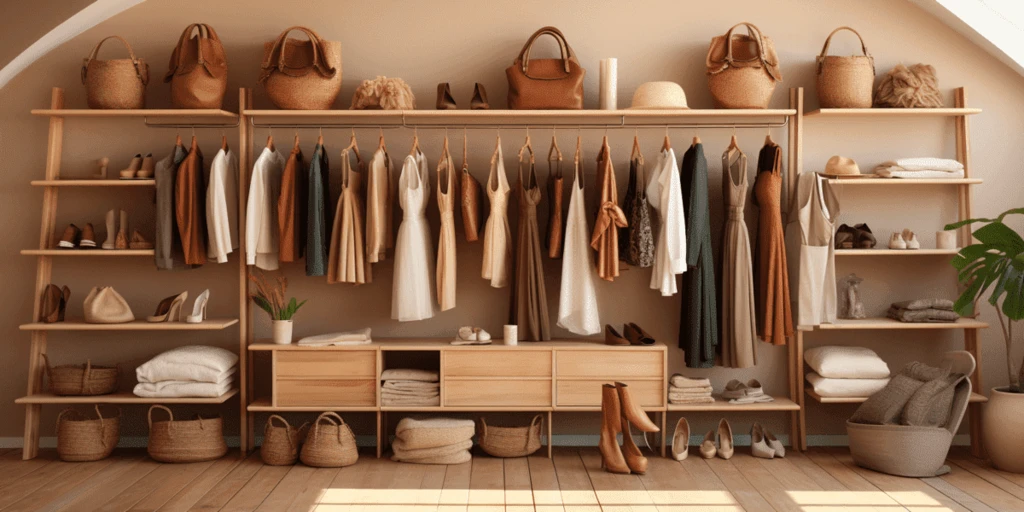
Modern life is characterized by information overload and constant stimulation—from digital notifications to marketing ads. A cluttered wardrobe, bursting with seldom-worn items, can symbolize and even reinforce that sense of chaos. In contrast, minimalist wardrobes offer an environment of visual and mental calm.
This desire for simplification is supported by research in environmental psychology, which shows that cluttered spaces can increase cortisol levels and stress. A minimalist wardrobe serves as a physical representation of a more ordered mind, offering psychological relief from overstimulation. It becomes a tool for mental clarity in a visually noisy world.
The Link Between Minimalism and Control
In times of uncertainty, humans gravitate toward areas of life where they can exert control. A minimalist wardrobe gives people a sense of autonomy over their environment. While the outside world may be unpredictable, the closet becomes a place of certainty and predictability.
This feeling of control is especially important in contexts where life feels unstable—economic pressures, job insecurity, or even global crises. Knowing that every piece in the wardrobe serves a purpose and fits well can offer a daily moment of groundedness. Psychologically, this translates to increased agency and reduced anxiety.
Sustainable Living and Moral Satisfaction
Another psychological layer comes from the ethical dimension of minimalism. As awareness of the environmental and labor impacts of fast fashion grows, many consumers are experiencing what researchers term “eco-guilt”—a sense of moral discomfort with wasteful or unethical consumption.
A minimalist wardrobe, often built on the principle of “buy less, buy better,” allows individuals to align their behavior with their values. Choosing slow fashion, investing in high-quality timeless pieces, or buying secondhand can foster a sense of moral integrity. This value-driven consumption reinforces self-esteem, particularly for those who prioritize sustainability, ethics, and long-term impact.
Freedom from Consumerist Pressure
Marketing thrives on dissatisfaction. Fast fashion brands promote constant novelty, convincing consumers that last month’s styles are already obsolete. The minimalist wardrobe trend, in contrast, is a rebellion against this pressure—a psychological reassertion of autonomy over desire.
Psychologically, choosing to reject consumerist norms fosters a sense of empowerment. The minimalist doesn’t chase trends; they set their own rules. This mindset can improve mental well-being by replacing externally driven impulses with internally guided principles. It’s the joy of sufficiency over excess.
Financial Wellness and Peace of Mind
Closely tied to psychological freedom is the financial benefit of minimalist fashion. Overconsumption leads to financial clutter just as much as wardrobe clutter. By reducing the frequency of purchases and prioritizing quality over quantity, minimalist consumers often find themselves saving money and feeling less pressured by retail marketing.
This contributes to financial security, which is a major pillar of psychological well-being. Minimalism doesn’t just clean the closet—it also cleans the budget. The result is less buyer’s remorse and a stronger sense of contentment with one’s belongings.
Time Efficiency and Mental Space
Minimalism creates time. With fewer items to choose from, maintain, or store, people spend less time thinking about clothes. This allows space for other priorities—family, work, hobbies, and rest. It aligns with the modern value of intentional living: making room for what truly matters.
Psychologically, this time-efficiency supports better focus, lowers mental fatigue, and opens up the day for fulfilling activities beyond fashion decisions. Clothing no longer becomes a source of stress but a simple tool to support life’s larger goals.
Minimalism as a Lifestyle and a Narrative
It’s important to note that for many, a minimalist wardrobe is not an isolated choice—it’s part of a broader lifestyle philosophy. It connects with movements like digital minimalism, slow living, and decluttering. At its heart, this lifestyle offers a narrative of intentionality, where each object has purpose and meaning.
Narrative psychology suggests that humans make sense of life through stories. Minimalism provides a story of focus, purpose, and personal sovereignty in a world that often feels chaotic. The wardrobe is just one chapter in that broader tale of mindful living.
Potential Downsides and Misinterpretations
While the minimalist wardrobe trend has clear psychological benefits, it’s important to avoid absolutism. For some, minimalism can morph into perfectionism or asceticism, leading to anxiety over owning “too much” or buying anything at all. In extreme cases, it can result in “decluttering fatigue” or an unhealthy obsession with control.
Moreover, minimalist fashion can sometimes become another form of elitism. The aesthetic of minimalism—neutral tones, expensive basics, and Scandinavian influences—is often inaccessible to those with limited means. Thus, the psychological benefits should be approached with flexibility and self-compassion, not rigid ideology.
Simplicity as Psychological Nourishment
The minimalist wardrobe trend is about far more than fashion. It is a reflection of deep psychological needs—for control, clarity, ethical alignment, and cognitive relief. In a world increasingly driven by noise and speed, minimalism offers a rare opportunity to pause, simplify, and realign with one’s values.
Ultimately, a minimalist wardrobe becomes a mental sanctuary. It simplifies decisions, enhances personal identity, and reflects a conscious choice to step away from external pressures and embrace what truly matters. Whether through reducing stress, saving time, or affirming moral values, the psychology behind minimalist fashion is not just persuasive—it’s profoundly human.