Throughout human history, volcanoes have been among the most awe-inspiring and terrifying natural phenomena. Their sudden eruptions, fiery displays, and destructive force made them appear as supernatural events beyond ordinary explanation.
For ancient societies, without the benefit of geological science, the eruption of a volcano seemed like a direct expression of divine will. Many cultures interpreted volcanoes as the anger of gods, viewing their fiery outbursts as punishment, warning, or divine communication.
The overwhelming power of eruptions
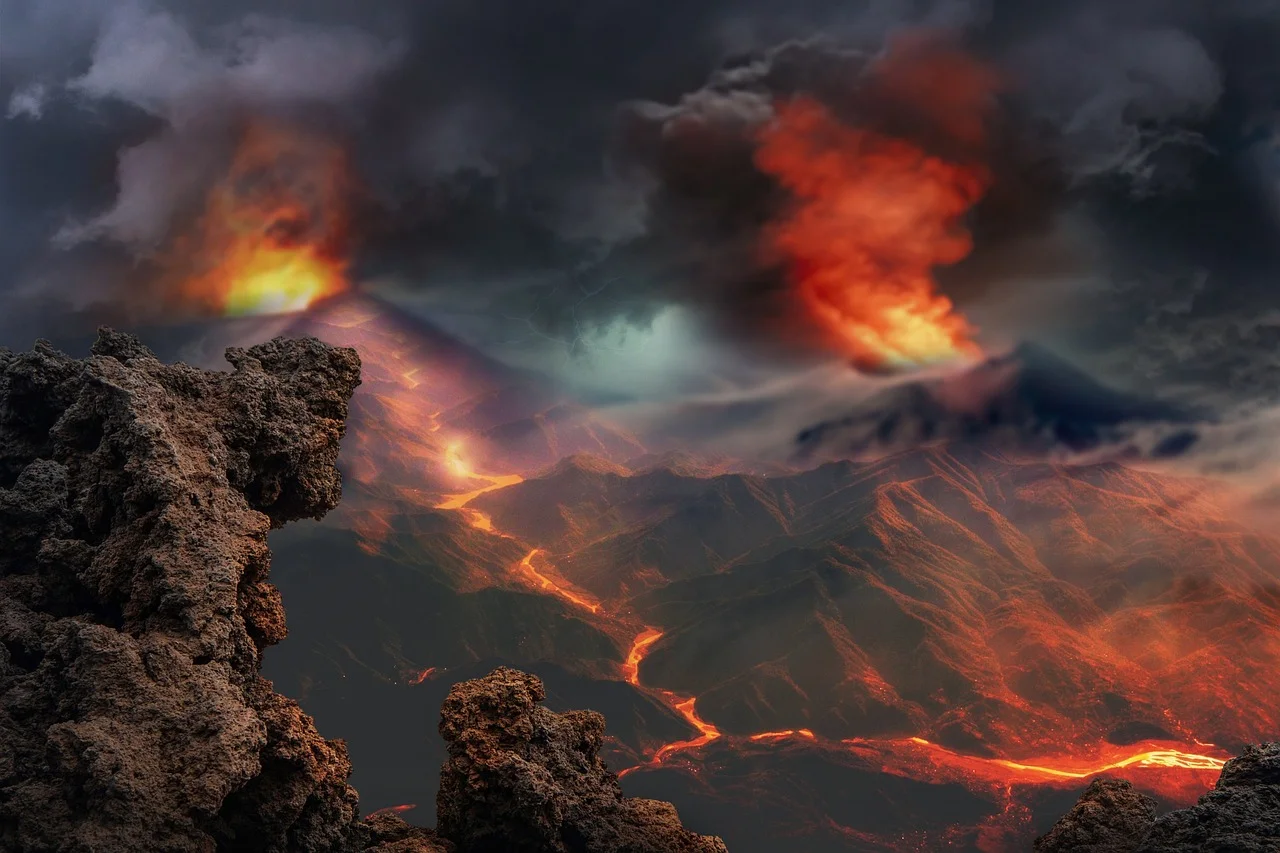
Volcanoes erupt with a combination of fire, ash, smoke, and earth-shaking tremors. For ancient observers, these events mirrored imagery associated with divine anger: flames like celestial fire, rumbling like thunderous voices, and destruction on a scale that seemed beyond human capacity. Because gods were often believed to control natural forces, eruptions were naturally interpreted as acts of deities expressing displeasure or exerting power over mortals. The inability of humans to prevent or control such disasters reinforced the perception that they were divine in origin.
Mythological explanations
Many mythologies feature volcanoes as sacred sites or the dwelling places of gods. In Hawaiian tradition, the volcano goddess Pele embodies both creation and destruction, her fiery eruptions seen as expressions of her temper. In Roman mythology, Mount Etna was believed to be the forge of Vulcan, god of fire, where his anger could burst forth in smoke and lava. The ancient Greeks associated volcanic activity with Hephaestus, whose subterranean workshops produced eruptions when he labored at his forge. These myths personalized volcanoes, transforming them into extensions of divine beings whose emotions shaped the physical world.
Volcanoes as punishments and warnings
In many traditions, volcanic eruptions were seen as punishment for human wrongdoing. Communities often believed that angering the gods through neglect of rituals, disrespect of sacred sites, or moral failings could provoke fiery retribution. For example, some legends around Mount Vesuvius suggested that the destruction of Pompeii was not just a geological event but a moral reckoning. Similarly, in parts of Central America, volcanoes were interpreted as expressions of deities demanding respect or sacrifices. This interpretation reinforced the importance of religious observance, as maintaining divine favor was seen as essential for survival.
Sacred offerings and appeasement
Because volcanoes were viewed as the homes or tools of gods, rituals of appeasement were common. Archaeological evidence suggests that offerings—including food, valuables, and sometimes even human sacrifices—were made near volcanic sites to calm divine anger. In Mesoamerican cultures, volcanoes were linked to rain and fertility gods, and ceremonies sought to transform destructive eruptions into blessings for agriculture. These practices reflected a worldview in which natural disasters could be negotiated through religious devotion, turning worship into a means of survival in volcanic regions.
Volcanoes and the dual nature of gods
While often associated with anger, volcanoes also embodied creation and renewal. The same lava flows that destroyed villages could, over time, enrich the soil and create fertile lands. This dual nature—destructive and life-giving—aligned with the personalities of many gods, who were not purely benevolent or malevolent but capable of both wrath and generosity. In this sense, volcanic eruptions were interpreted not only as anger but as part of a divine cycle of destruction and rebirth, reminding humans of their dependence on the forces of nature.
The psychological impact of unpredictability
Part of what made volcanoes so terrifying was their unpredictability. Unlike seasonal floods or storms, eruptions could occur suddenly, without warning. This unpredictability heightened their association with divine will, since the timing seemed arbitrary or mysterious. People sought meaning in these disasters by linking them to human actions or divine moods, creating narratives that explained the inexplicable. By framing eruptions as divine anger, societies imposed order on chaos, turning random destruction into a comprehensible moral or spiritual lesson.
Examples from different cultures
Across the world, volcanic regions inspired unique myths that emphasized divine wrath:
- Hawaii – Pele’s eruptions were interpreted as outbursts of anger, but also as acts of creation shaping the islands themselves.
- Italy – Mount Vesuvius and Mount Etna were linked to gods of fire, their eruptions seen as demonstrations of divine fury or labor.
- Japan – Mount Fuji was associated with deities, and its eruptions interpreted as signs of displeasure that required ritual responses.
- Indonesia – Volcanoes were considered sacred, with eruptions seen as punishments from gods or ancestral spirits for human failings.
These examples show that, despite cultural differences, volcanoes consistently became symbols of divine power and anger in human imagination.
The legacy of interpretation
Even after scientific explanations of volcanoes emerged, cultural associations with divine anger did not vanish. In some communities, traditional interpretations coexist with geological knowledge, providing dual frameworks of meaning. For many people, volcanoes remain sacred, and eruptions still inspire rituals of reverence. The persistence of these beliefs underscores the deep psychological impact volcanoes have had throughout history, shaping not just mythology but also cultural identity and resilience.
Fiery mountains as mirrors of belief
Volcanoes were often interpreted as the anger of gods because their power mirrored human ideas of divine wrath: sudden, overwhelming, and beyond human control. Through myths, rituals, and cultural narratives, societies gave meaning to eruptions, transforming them into expressions of morality, warnings from deities, or parts of cosmic cycles of destruction and renewal. These fiery mountains became sacred mirrors of human belief, embodying both fear and reverence. By interpreting volcanoes in this way, ancient peoples sought not only to explain natural disasters but also to understand their place in a world governed by forces larger than themselves.