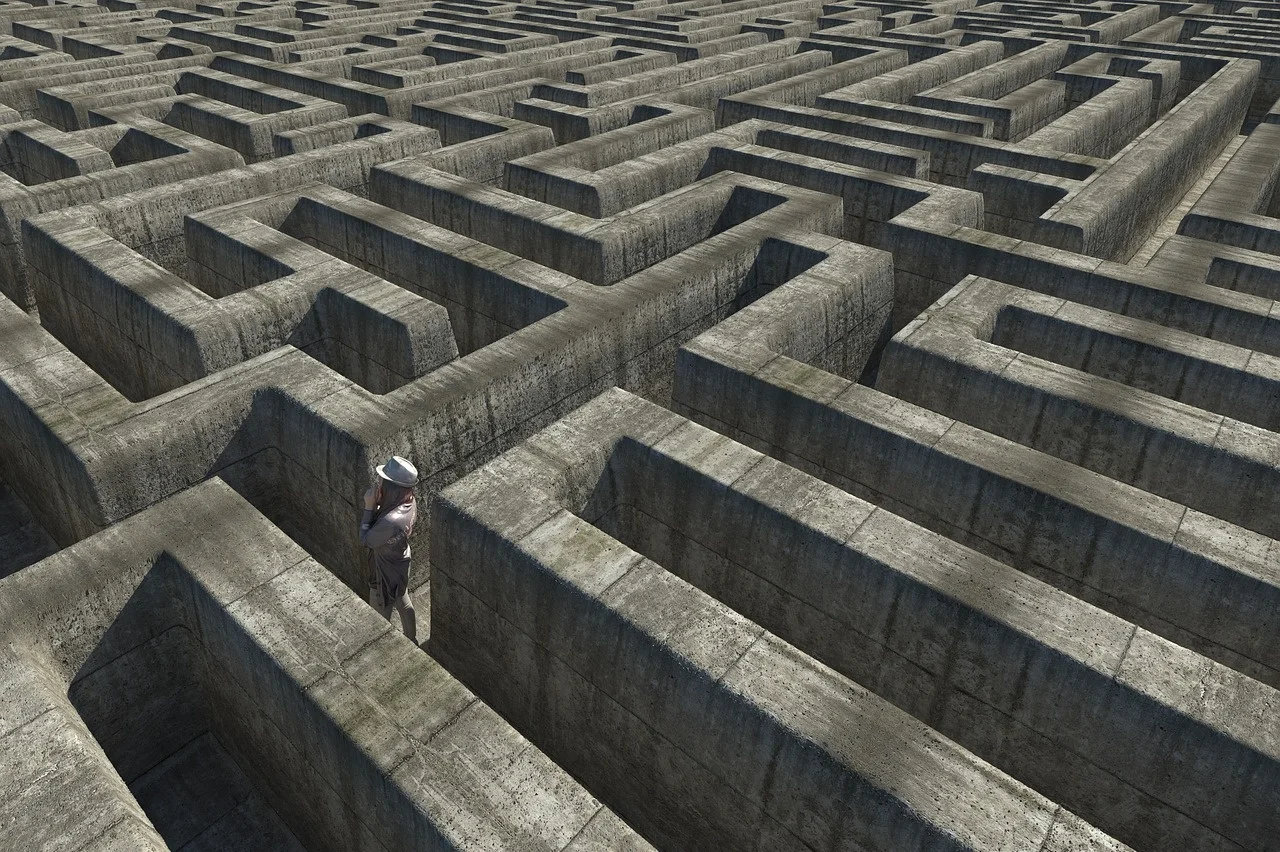
Across cultures and centuries, labyrinths and mazes have appeared as more than just architectural puzzles or artistic designs. In mythology, they often symbolized complex spiritual journeys, transformations of the soul, and confrontations with inner challenges.
Whether depicted as winding paths in ancient Greece, sacred patterns in Native American traditions, or meditative designs in medieval Europe, labyrinths and mazes came to embody the idea that life itself is a journey filled with twists, trials, and revelations. Their association with spirituality arises from how they visually and physically mirror the challenges of seeking meaning, order, and enlightenment.
The Greek labyrinth of the Minotaur
The most famous labyrinth in mythology is the Cretan labyrinth built by Daedalus to contain the Minotaur. In this story, the labyrinth is both a prison and a test of courage. Theseus must enter its winding corridors, confront the beast, and find his way out with the help of Ariadne’s thread. The myth reflects a metaphorical journey: descending into chaos, facing fear, and emerging transformed. For the Greeks, the labyrinth symbolized the perilous path of human struggle, where only through wisdom, bravery, and guidance could one achieve triumph over darkness.
Labyrinths as symbols of the soul’s path
Unlike a maze with dead ends and choices, a classical labyrinth usually has a single winding path leading to the center and back out again. This design made it a powerful spiritual metaphor. Walking the labyrinth symbolized a pilgrimage inward, toward self-discovery or divine truth, followed by a return to the world renewed. Many cultures interpreted this pattern as representing the soul’s journey through confusion, suffering, and reflection before reaching enlightenment or harmony.
Native American medicine wheels and labyrinthine designs
Among Native American traditions, circular labyrinth-like designs appear in medicine wheels and ritual patterns. These were not simply decorative but served as spiritual maps of the universe, marking directions, seasons, and cycles of life. Walking or contemplating such patterns allowed participants to engage with spiritual forces and reflect on their place within creation. Much like labyrinths in other traditions, these designs guided individuals on symbolic journeys of balance and unity.
Medieval Christian labyrinths
During the Middle Ages, labyrinths were incorporated into the floors of European cathedrals, most famously at Chartres Cathedral in France. These designs were walked by pilgrims who could not travel to Jerusalem, symbolizing a spiritual pilgrimage within sacred space. The act of following the labyrinth’s path became an embodied prayer, representing the believer’s journey toward God. Each turn along the way reflected moments of trial, temptation, or reflection, while reaching the center signified divine encounter.
The duality of mazes: confusion and enlightenment
While labyrinths often symbolized a singular path toward truth, mazes—with their branching choices and dead ends—carried a different but related symbolism. They represented life’s confusions, where humans encounter uncertainty and must make decisions without knowing the outcome. In mythology, this mirrored the moral and existential dilemmas of human existence. Successfully navigating a maze suggested not only intelligence but also spiritual insight, as those who reached the goal proved capable of discerning truth amid illusion.
Transformation through difficulty
Central to the association of labyrinths with spirituality is the idea of transformation. Walking a labyrinth or surviving a maze was not only a physical feat but also a symbolic act of rebirth. Entering the labyrinth meant leaving behind certainty; reaching the center symbolized death or confrontation with the self; and returning to the outside represented renewal. This pattern echoed initiatory rituals in many cultures, where individuals underwent symbolic “deaths” before re-emerging as changed beings.
Labyrinths in myth as metaphors for the cosmos
Many labyrinths were interpreted as microcosms of the universe. The winding paths symbolized cosmic order hidden beneath apparent chaos. For ancient societies, where myth and cosmology intertwined, the labyrinth served as a visual reminder that the universe itself was a mysterious but structured whole. Walking through such a pattern mirrored humanity’s search for order within the vastness of existence. In this sense, the labyrinth was not merely a physical journey but a symbolic reenactment of cosmic harmony.
The psychological dimension
In addition to spiritual symbolism, labyrinths and mazes carried psychological meaning. They provided metaphors for the human mind, with its complexities, confusions, and hidden chambers. Myths often depicted heroes wandering through labyrinthine spaces as reflections of inner struggle, grappling with fear, desire, or self-doubt. Emerging from the labyrinth symbolized integration, clarity, and the overcoming of inner obstacles. This psychological interpretation contributed to the enduring connection between labyrinths and spiritual journeys, since both involved confronting the unseen and emerging wiser.
Labyrinth walking as meditation
In many traditions, the practice of walking a labyrinth was itself a spiritual discipline. Unlike mazes, which challenged logic, labyrinths encouraged contemplation. Each step inward became a focus for meditation, prayer, or reflection. The act of slowly following the path allowed participants to quiet their thoughts and open themselves to insight. This meditative quality reinforced the labyrinth’s association with spiritual journeys, not only in myth but also in lived practice across centuries.
Universal themes in labyrinth symbolism
Despite differences in design and cultural context, labyrinths and mazes consistently embodied certain universal themes:
- Journey – A path to be traveled, often with symbolic trials.
- Transformation – A movement from ignorance to knowledge, weakness to strength, or chaos to order.
- Confrontation – Facing inner or outer challenges, symbolized by monsters or dead ends.
- Renewal – Emerging changed, wiser, or spiritually elevated.
These themes explain why labyrinths and mazes became enduring symbols in mythology: they captured the essence of human existence as both confusing and purposeful, perilous and enlightening.
Labyrinths as enduring mirrors of the human journey
Mythology turned labyrinths and mazes into more than architectural curiosities. They became metaphors for the human quest for meaning, embodying the challenges, choices, and transformations of life itself. From the Greek labyrinth of the Minotaur to the stone patterns of medieval cathedrals, these designs spoke to universal concerns: the fear of chaos, the hope for clarity, and the belief that journeys through confusion can lead to renewal. Even today, labyrinths continue to inspire meditation, art, and spiritual reflection, serving as enduring mirrors of humanity’s search for truth and transcendence.