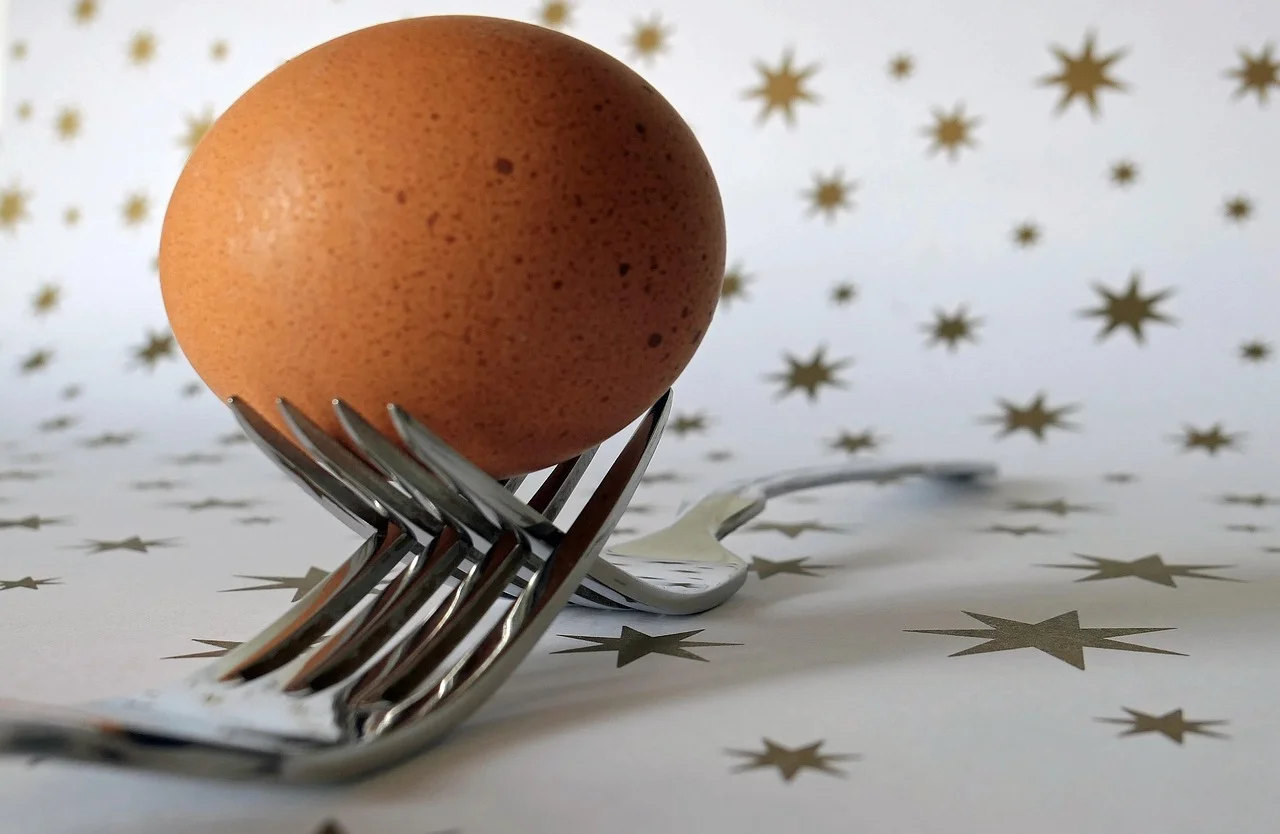
Among the many images humans have created to explain the beginning of the world, the cosmic egg stands out for its simplicity and universality. The egg, a natural symbol of life and transformation, has appeared in mythologies across continents as the vessel from which the universe emerged.
From ancient India and Greece to Egypt, China, and Finland, the concept of the cosmic egg provided a metaphor for creation that bridged natural observation with spiritual imagination.
The egg as a universal symbol
The egg naturally embodies the idea of potential. Fragile yet self-contained, it carries the mystery of life within a shell. Ancient peoples recognized this quality and projected it onto the cosmos itself. Just as chicks or reptiles broke free from eggs, the universe was imagined as hatching from a primordial egg, containing within it the seeds of all existence. This metaphor required no advanced cosmology—it translated the mystery of creation into something familiar, observable, and profoundly symbolic.
Indian traditions and the golden egg
In Hindu cosmology, the concept of the Hiranyagarbha, or “golden womb/egg,” plays a central role. Ancient texts describe the universe as originating from this radiant egg, floating in the cosmic waters. From it emerged Brahma, the creator god, who shaped the heavens and the earth. The egg’s golden aspect emphasized purity, radiance, and divine potential. In some accounts, the shell of the egg became the heavens and the earth, reflecting a worldview in which the universe was divided into layered realms. This myth anchored Hindu creation stories in a powerful image of unity and emergence.
Greek Orphic cosmology
Greek mythology also adopted the cosmic egg in the Orphic tradition, a mystical branch of Greek thought. According to these myths, the primordial deity Chronos (Time) generated a silver egg in the chaos of the universe. From this egg hatched Phanes, a radiant being associated with light, order, and procreation. Phanes became the first ruler of the cosmos, bringing structure to chaos. Here, the egg symbolized not only birth but also illumination—the emergence of light from darkness. The Orphic egg was often depicted encircled by a serpent, symbolizing eternity and cyclical renewal.
Egyptian imagery of the cosmic egg
In Egyptian mythology, the cosmic egg appeared in connection with solar worship. Some traditions described the sun god Ra as emerging from a primeval egg laid by a celestial bird, sometimes the goose or the ibis. The egg floated in the waters of chaos before giving rise to the first light. This imagery tied creation to the daily rising of the sun, reinforcing the cyclical nature of life and cosmic order. The egg thus became a bridge between myth and natural observation, linking cosmic origins to everyday experience.
Chinese myth and the story of Pangu
In Chinese mythology, the cosmic egg contained the giant Pangu, who slept within it for thousands of years. When he awoke, he broke the egg, separating its lighter parts to form the heavens and its heavier parts to form the earth. Pangu stood between them, keeping the two realms apart until he eventually died, and his body became the mountains, rivers, winds, and stars. Unlike other traditions, this story emphasized both the egg’s role as a container of potential and the transformative sacrifice of Pangu, whose body became the fabric of the universe.
Finnish Kalevala and the egg of the sky
In the Finnish national epic Kalevala, creation begins with a bird laying eggs on the knee of the goddess Ilmatar as she floats in the primordial waters. When the eggs break, their fragments form the earth, sky, sun, and moon. This myth highlights the fragility of the egg, whose breaking unleashes the structured world. By grounding cosmic origins in a familiar natural process—the hatching of a bird’s egg—the Kalevala framed creation as both ordinary and sacred, accessible to human imagination.
Comparative symbolism across cultures
Although these myths developed in different cultural contexts, they share striking similarities. The cosmic egg consistently represents unity, potential, and transformation. Whether golden, silver, or fragile, it holds within it the seeds of existence. The act of breaking or hatching symbolizes the movement from chaos to order, from undifferentiated wholeness to structured multiplicity. The egg’s duality—the inner life enclosed by an outer shell—mirrors the human perception of the cosmos as containing both hidden mysteries and visible realities.
The egg as a metaphor for order emerging from chaos
The cosmic egg myths often begin with a background of primordial waters, void, or darkness. The egg floats in this chaos, representing potential waiting to be realized. When it breaks, it produces separation—heaven from earth, light from darkness, life from non-life. This pattern resonates with the human need to explain how structured reality could emerge from formless beginnings. By drawing on the familiar process of an egg hatching, these myths provided a powerful metaphor for the birth of order in the universe.
Psychological and symbolic interpretations
Modern scholars often interpret the cosmic egg through psychological and symbolic lenses. The egg can represent the unconscious mind, with its hidden potential breaking into conscious awareness. It also symbolizes the womb, linking cosmic creation to human birth. The recurring image of an egg across so many traditions suggests that it tapped into a universal archetype—a shared human intuition about beginnings, fertility, and transformation. This universality reinforces the idea that myth serves as both cultural expression and psychological reflection.
Enduring influence in art and philosophy
The cosmic egg did not vanish with ancient mythology. It continued to inspire art, philosophy, and even science. Alchemists in the medieval period spoke of the philosophical egg as a symbol of transformation. In modern times, cosmologists have drawn metaphorical comparisons between the cosmic egg and the singularity of the Big Bang, where all matter and energy were contained before expanding into the universe. While science does not treat these myths literally, the egg endures as a poetic image linking ancient imagination to modern inquiry.
The cosmic egg as a timeless symbol of beginnings
From India to Greece, Egypt, China, and Finland, the cosmic egg emerged as a universal metaphor for creation. Its fragile shell, containing the potential for life, resonated across cultures as an explanation for how the universe could arise from mystery. These myths reflect humanity’s enduring effort to make sense of origins using familiar symbols drawn from nature. The cosmic egg continues to remind us that the story of the universe is not only a scientific question but also a profoundly human one, shaped by imagination, symbolism, and the search for meaning.