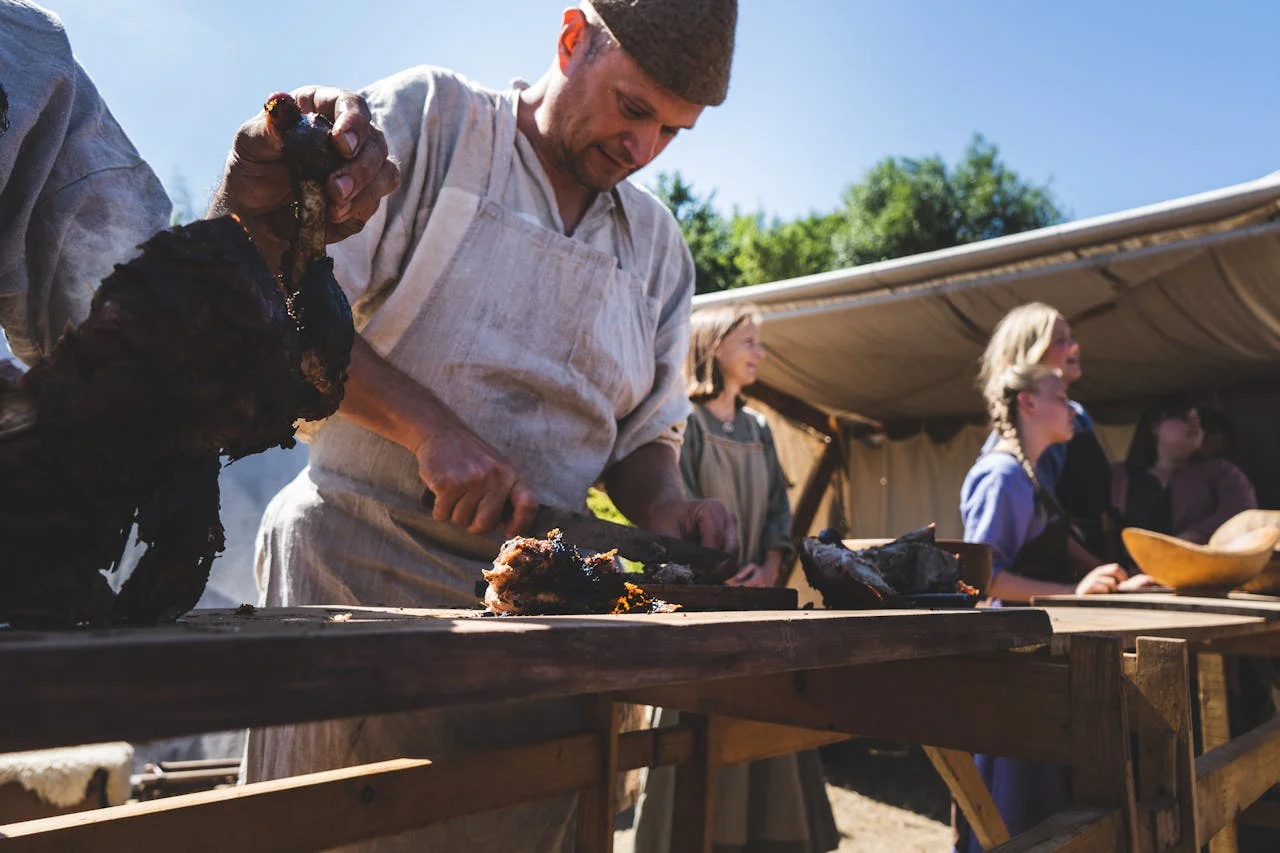
In the bustling towns and cities of medieval Europe, guilds stood at the center of daily economic and social life. These associations of craftsmen and merchants were far more than professional organizations. They regulated quality, protected members, and shaped the way commerce operated for centuries.
The origins of guilds
Guilds emerged in the early Middle Ages, around the 10th and 11th centuries, as towns grew and trade expanded. At first, they were informal groups of artisans or merchants who banded together for mutual protection and support. Over time, they became formalized institutions recognized by civic authorities and often backed by charters. Their rise reflected the growing importance of urban centers, where economic life depended on cooperation and regulation among skilled workers and traders.
Two main types of guilds
Guilds fell broadly into two categories:
- Craft guilds – associations of artisans who produced goods, such as weavers, blacksmiths, masons, or shoemakers. These guilds focused on maintaining standards of production and training future craftsmen.
- Merchant guilds – associations of traders who dominated the exchange of goods, both locally and across borders. They negotiated trade privileges, secured safe routes, and ensured members benefited from collective bargaining power.
Together, these two branches of guilds formed the backbone of medieval commerce, bridging production and distribution.
Regulation of quality and standards
One of the most important functions of craft guilds was the regulation of quality. Guilds set strict rules on how goods were to be made, the materials that could be used, and the standards of workmanship required. A poorly made shoe, for instance, risked not only the shoemaker’s reputation but the reputation of the entire guild. By policing quality, guilds protected consumers, ensured fair prices, and upheld the prestige of their trade. This system helped create trust between buyers and producers in an age when mass communication and consumer protections did not exist.
The training of apprentices
Guilds also served as educational institutions. Young boys, often around the age of twelve, entered a trade as apprentices under the guidance of a master craftsman. After years of training, they became journeymen, traveling to different towns to hone their skills. Eventually, those who proved their ability could submit a “masterpiece” to the guild as evidence of their talent. If accepted, they were admitted as masters and allowed to open their own workshops. This structured system of apprenticeship ensured that trades remained vibrant, consistent, and passed down from one generation to the next.
Economic protection and monopolies
Guilds also acted as protectors of their members’ livelihoods. In many towns, guilds enjoyed monopolies over certain trades. Only those belonging to the guild could legally sell specific goods or services. While this limited competition, it also protected members from outside threats and instability. Merchant guilds, in particular, negotiated privileges with kings or city councils, granting them exclusive rights to trade in certain regions. These protections gave guilds immense economic power and allowed them to thrive even during turbulent times.
Guilds as social institutions
Beyond commerce, guilds were also social organizations. Members participated in religious festivals, supported one another in times of illness, and provided aid for widows and orphans. Many guilds sponsored altars or chapels within local churches, reinforcing their spiritual as well as economic roles. By fostering solidarity and offering security, guilds became essential components of urban community life, binding individuals together through both work and faith.
Political influence of guilds
Guilds often wielded significant political power. In some towns, they influenced or even controlled municipal governments, shaping policies that affected trade and daily life. Merchant guilds, in particular, played crucial roles in negotiating with rulers and securing trade privileges. In certain regions, guild representatives held seats in town councils, giving craftsmen and traders a voice in governance. This involvement blurred the lines between economic and political authority, making guilds key players in shaping medieval civic identity.
International networks and trade
While many guilds were local in scope, some merchant guilds created international networks. The Hanseatic League, for example, was a powerful confederation of merchant guilds that dominated trade across the Baltic and North Seas from the 13th to the 15th centuries. This network of towns and traders controlled shipping routes, set tariffs, and ensured mutual protection. It exemplifies how guild structures could expand beyond local economies to influence entire regions, integrating Europe into a broader system of commerce.
Guilds and the arts
Craft guilds were not limited to practical trades—they also fostered the arts. Painters, sculptors, and architects were often organized into guilds that regulated artistic training and commissions. The guild system ensured that monumental projects such as cathedrals were executed with consistency and skill. These artistic guilds left behind a legacy not only of craftsmanship but also of cultural identity, as guild-sponsored works became symbols of civic pride.
Criticism and decline of guilds
Despite their importance, guilds were not without critics. Their monopolistic tendencies often stifled innovation and restricted economic freedom. As Europe transitioned into the Renaissance and early modern periods, new economic models, such as capitalist enterprises and state-regulated markets, began to challenge guild authority. By the 17th and 18th centuries, many guilds had lost their influence, replaced by more flexible and competitive systems of production and trade.
Guilds as symbols of medieval identity
Though their power eventually waned, guilds remain symbols of medieval identity, representing a world where work, community, and faith were deeply interconnected. They fostered economic stability, preserved craft traditions, and offered social protection in uncertain times. For centuries, they shaped the rhythm of urban life, creating a structured environment where commerce and culture flourished together. The mosaic of medieval Europe, with its bustling marketplaces and thriving towns, cannot be understood without recognizing the guilds at its core.